
'Even if Serum Institute and Bharat Biotech were successful in ramping up production overnight, what happens to the capacity after the demand from India is met?' asks Sanjeev Nayyar.
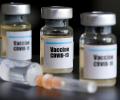
'Pfizer India has submitted an application on December 4 to the DCGI seeking emergency use authorization for its COVID-19 vaccine in India'

World leaders thanked India for its help and support in combating the coronavirus pandemic through "early and meaningful" shipments of COVID-19 vaccine doses, as they addressed the high-level UN General Assembly session this year.

India has airlifted more than 6 million COVID-19 doses to nine countries in Phase-I under its initiative termed "Vaccine Maitri".

The Union health ministry said in a statement on Monday that over 23,000 adverse events have been reported since the vaccination drive involving Covishield and Covaxin vaccines started in the country and of these 700 cases were reported to be serious.
In a joint statement posted on their respective twitter accounts, the companies said Serum Institute Chief Executive Officer Adar Poonawalla and Bharat Biotech Chairman Krishna Ella communicated their combined intent to develop, manufacture and supply the COVID-19 vaccines.
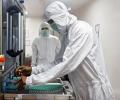
The vaccine would be first made available to the vulnerable population and eventually, it would be available in the private market for all.

About 18-19 coronavirus vaccine candidates are in different clinical trial stages and may be available in the coming months, Health Minister Harsh Vardhan said on Monday.
Pune-based Serum Institute of India (SII) is sitting on 200 million doses of Covishield that were manufactured in December and are set to expire in September. The company is likely to destroy these vaccines if nothing works out, Sohini Das reports.
A source closely involved in logistical arrangements said the movement of vaccine doses is likely to start from early Tuesday morning through road and air routes amid elaborate police security.
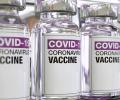
With talks underway between the central government and Zydus Cadila over the pricing of the COVID-19 vaccine ZyCov-D, the pharma company is learnt to have proposed a price of Rs 1,900 for its three-dose jab that can be given to those above 12 years of age.
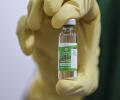
The Biden administration had been under pressure to send the excess COVID-19 vaccines with the US to nations like India, which are facing severe vaccine shortages.
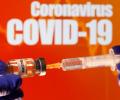
The Serum Institute of India, the largest vaccine maker in the world, has been chosen by Oxford and its partner AstraZeneca to manufacture the vaccine once it is ready. Trials results for the first two phases were published earlier this month.
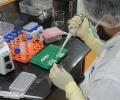
According to government sources, the matter was discussed by the national expert group on vaccine administration for COVID-19 in its last meeting held on August 22.

The Central Drugs Standard Control Organisation has granted restricted emergency use authorisation to two new vaccines and a drug for COVID-19, taking the number of preventives and treatments available in India to 12.

Once available, Sputnik V will be the third vaccine to be used in India against coronavirus.

The Joe Biden administration has come under intense pressure from various quarters, including the powerful US Chambers of Commerce, lawmakers and eminent Indian-Americans, to ship AstraZeneca and other Covid-19 vaccines along with several life-saving medical supplies to India, which is witnessing a deadly surge in coronavirus cases.

Modi on Saturday will embark on a three-city tour to take stock of the COVID-19 vaccine development work.

The Commonwealth of Dominica will bestow its highest national award, the Dominica Award of Honour, upon Prime Minister Narendra Modi this month in recognition of his contributions to Dominica during the COVID-19 pandemic and his dedication to strengthening the partnership between the two countries.
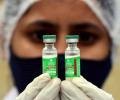
Dr Malhotra, who has demanded a full safety review into the use of AstraZeneca's Covid vaccine, told PTI Covishield "should never have been rolled out in the country in the first place".
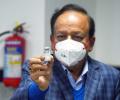
500 million doses per annum from its two sites in Hyderabad and 200 million doses each from its Ankleshwar and Kolar facilities.

Currently, phase 2 and 3 clinical trials of the Oxford vaccine candidate is going on in the United Kingdom, phase 3 clinical trial in Brazil and phase 1 and 2 clinical trials in South Africa.

A number of Indian medical experts on Monday supported calls from an eminent British Indian cardiologist for a full safety review into the use of Oxford/AstraZeneca's Covid-19 vaccine, administered in India as Covishield, over feared serious side effects such as heart attack and stroke.
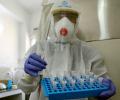
Three COVID-19 vaccine candidates, including two indigenous ones, are in different phases of development in India.

Some states have flagged the shortage of vaccines and expressed their inability to start vaccination of people above 18 years from Saturday
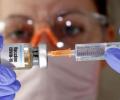
The Pune-based company's chief executive Adar Poonawalla said the company, which is the largest vaccine maker in the world, is putting $200 million at risk by manufacturing nearly 300 million doses before the final nod to launch the vaccine in market, which is expected at best by the end of the year.
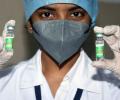
Covishield comprises over 90 pc of 12.76 cr COVID vaccines administered so far

The further distribution of vaccine to the districts will be done as per the registered beneficiaries, for which a separate communication will be done shortly, the letter stated.
Poonawalla, during an interaction with Odisha Chief Minister Naveen Patnaik through a video conference, expressed optimism that the COVID-19 vaccine could be ready by October-November this year and the next phase of the trial can start in mid-August in India. According to a press note released by the CMO, Poonawalla has informed that the Oxford University vaccine has shown promising results in the first phase trial.

Ahmedabad was the first stop in the PM's three city tour today, to personally review the vaccine development and manufacturing process in the country.
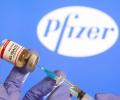
At $37 per dose, the Pfizer vaccine is much more expensive compared to $3 per dose for the Covishield.

In recent months, several pharma multinational corporations (MNCs) are increasingly turning to Indian companies to expand market reach in the country's pharmaceuticals sector. Sanofi's partnerships with Dr Reddy's, Cipla, and Emcure, AstraZeneca and Mankind Pharma - teaming up for asthma medication distribution - are a few instances of this trend. This strategy allows MNCs to leverage established Indian networks and reach a wider audience. Indian companies also benefit from global brands and expertise, say analysts.

Waltz after being elected as the Co-Chair of India Caucus in January last year had said that India is the world's largest democracy and an important strategic partner for the United States.
The procurement and distribution will be centralised though the government is yet to take a call on the initial number of doses that will be procured.

Out of the 447 adverse events following immunisation, only 3 required hospitalisation.

As India gets ready to roll out one of the largest vaccine programmes, billionaire Mukesh Ambani on Tuesday said his group is working with authorities to provide technology tools and backbone for mass inoculation against COVID-19. Ambani's telecom venture Jio was rolled out four years back, offering free voice calling and dirt-cheap data. Today, Jio is India's largest telecom operator with over 400 million users, each connected to the internet. At a Facebook event, Ambani said the government's digital push kept the country running even during the pandemic and is now helping in the rollout of one of the largest vaccination programmes.

US President Joe Biden on Wednesday announced that the US will allocate 75 per cent - nearly 1.9 crore of the first tranche of 2.5 crore doses - of unused COVID-19 vaccines from its stockpile through the UN-backed COVAX global vaccine sharing programme to countries in South and Southeast Asia as well as Africa.

Communications between the USTR and the world's most powerful pharmaceutical and trade lobbying groups reveal that many raised concerns about India's push to exempt Covid vaccines from intellectual property.

India has purchased 500 million doses of the Oxford University-AstraZeneca vaccine candidate, one billion from the United States company Novavax and 100 million doses of the Sputnik V candidate from Russia's Gamaleya Research Institute, according to the US-based Duke University Global Health Innovation Center.

"The country wide vaccination exercise is being exponentially expanded to include those above 60 years of age and those above 45 years with co-morbidities, from March 1.
